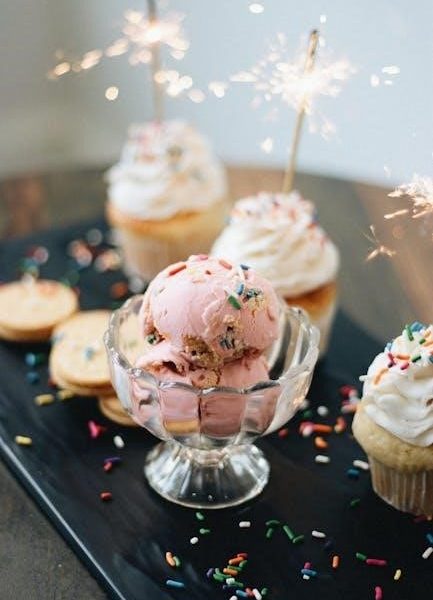
ice cream maker recipe book pdf
Article Plan: Ice Cream Maker Recipe Book PDF
This guide details creating a comprehensive PDF resource for homemade ice cream enthusiasts, covering recipes, techniques, troubleshooting, and resources for optimal results.
It explores various ice cream maker types, ingredient selection, and advanced methods, alongside safety and storage considerations for delightful frozen treats.
Homemade ice cream is a delightful culinary adventure, transforming simple ingredients into a frozen masterpiece. This journey begins with understanding the basic science – freezing a flavored dairy base while incorporating air for a smooth texture.
Historically, ice cream was a labor-intensive process, requiring hand-cranking and plenty of ice. Modern ice cream makers have revolutionized this, making it accessible to everyone.
A well-structured recipe book, especially in PDF format, becomes an invaluable tool. It provides a curated collection of recipes, guiding you through each step, from custard creation to final freezing, ensuring consistently delicious results.
Why a PDF Recipe Book?
A PDF recipe book offers unparalleled convenience and accessibility for ice cream enthusiasts. Unlike physical books, PDFs are easily stored, searched, and printed, allowing for kitchen flexibility.
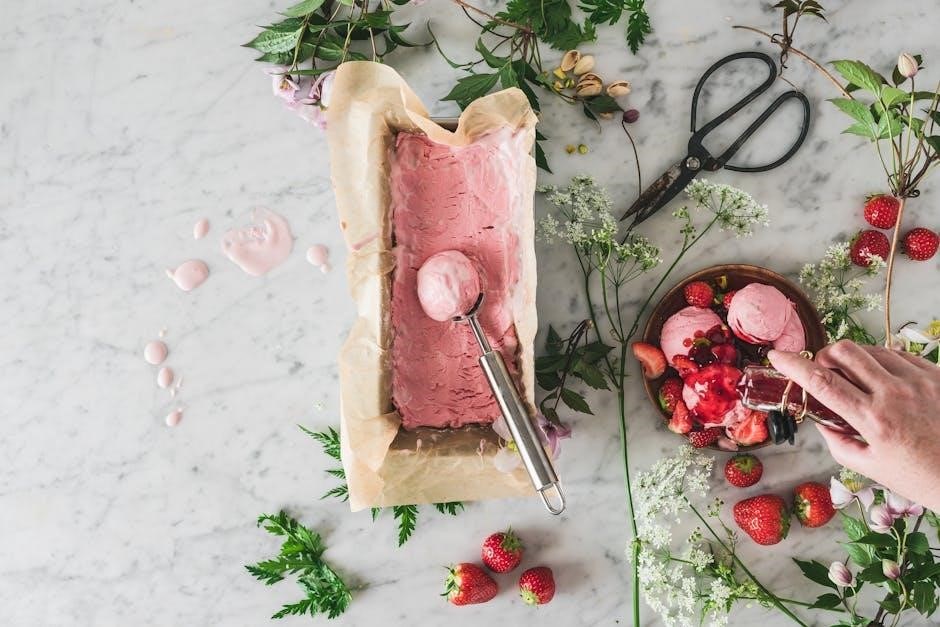
Digital format enables effortless organization, bookmarking favorite recipes, and adding personal notes. Furthermore, PDFs are readily shareable with friends and family, spreading the joy of homemade ice cream.
The portability of a PDF means recipes are available on any device – tablets, smartphones, or laptops – perfect for browsing while shopping or during the ice cream-making process.
Benefits of Using an Ice Cream Maker
Ice cream makers empower you to craft customized frozen desserts, controlling ingredients and flavors to suit dietary needs and preferences. Say goodbye to store-bought additives and hello to fresh, natural goodness!
Homemade ice cream boasts superior taste and texture compared to commercially produced options. The process is surprisingly rewarding, fostering creativity and culinary skills.
An ice cream maker provides a fun activity for families and friends, creating lasting memories. Plus, it’s a cost-effective alternative to frequent ice cream parlor visits!
Types of Ice Cream Makers
Several ice cream maker varieties cater to different budgets and preferences. Compressor models, self-refrigerating, offer convenience but come with a higher price tag. They continuously churn, yielding consistent results.
Freezer bowl machines require pre-freezing the bowl for 12-24 hours, making planning essential. They are more affordable and suitable for occasional use.
Hand-crank models offer a traditional, manual experience, perfect for those seeking a nostalgic approach. They demand physical effort but provide complete control over the churning process.
Compressor Ice Cream Makers
Compressor ice cream makers represent the premium tier, boasting built-in refrigeration. This eliminates the need for pre-freezing, offering unparalleled convenience and allowing for back-to-back batches. They consistently deliver smooth, creamy textures due to continuous churning.
However, these machines are typically the most expensive and can be bulkier than other types. They are ideal for frequent ice cream makers who prioritize ease of use and consistent quality, justifying the investment.
Freezer Bowl Ice Cream Makers
Freezer bowl ice cream makers are a popular choice due to their affordability and simplicity. They require pre-freezing the bowl – typically for 12-24 hours – before use. This frozen bowl chills the ice cream base as it churns, creating a frozen dessert.
While less expensive than compressor models, they are limited to one batch per freezing cycle. Consistent freezing is crucial for optimal results, and the bowl’s temperature impacts texture. They are great for occasional ice cream making.
Hand-Crank Ice Cream Makers
Hand-crank ice cream makers offer a traditional, and often nostalgic, ice cream making experience. They involve a bucket filled with ice and salt, surrounding a canister holding the ice cream base. Manual cranking provides the agitation needed to freeze the mixture.
While requiring more effort, they offer complete control over the process. They are ideal for small batches and don’t rely on electricity. Consistent cranking speed is key to achieving a smooth texture, making it a fun, interactive activity.
Essential Ingredients for Homemade Ice Cream
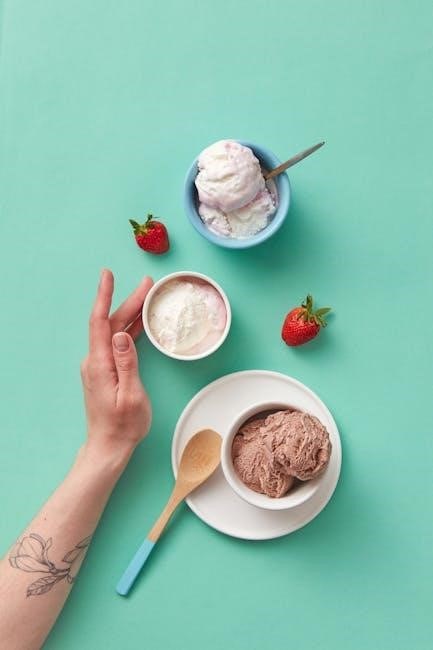
Creating exceptional homemade ice cream begins with quality ingredients. A successful recipe relies on a harmonious blend of dairy, sweeteners, and flavorings. The dairy base, typically cream and milk, provides richness and texture. Sweeteners, like sugar or corn syrup, contribute sweetness and influence freezing point.
Flavorings, ranging from vanilla extract to fresh fruits, define the final taste. Understanding ingredient ratios and their impact on the final product is crucial for consistent results. Experimentation is encouraged, but a solid foundation is key.
Dairy Base Options (Cream, Milk, etc.)
The dairy base profoundly impacts ice cream’s texture and richness. Heavy cream, with its high fat content, yields a supremely creamy result. Whole milk provides a lighter texture, while lower-fat options can be used, though they may require stabilizers. Combining cream and milk offers a balance.
Consider the fat percentage; higher fat equates to smoother ice cream. Experimenting with different ratios allows customization. Non-dairy alternatives, like coconut milk or cashew cream, are viable for vegan options, but may alter the final texture.
Sweeteners (Sugar, Corn Syrup, etc.)
Sweeteners contribute to both flavor and texture in homemade ice cream. Granulated sugar is the most common choice, providing sweetness and bulk. Corn syrup, or glucose, inhibits ice crystal formation, resulting in a smoother consistency. Using a combination of both often yields the best results.
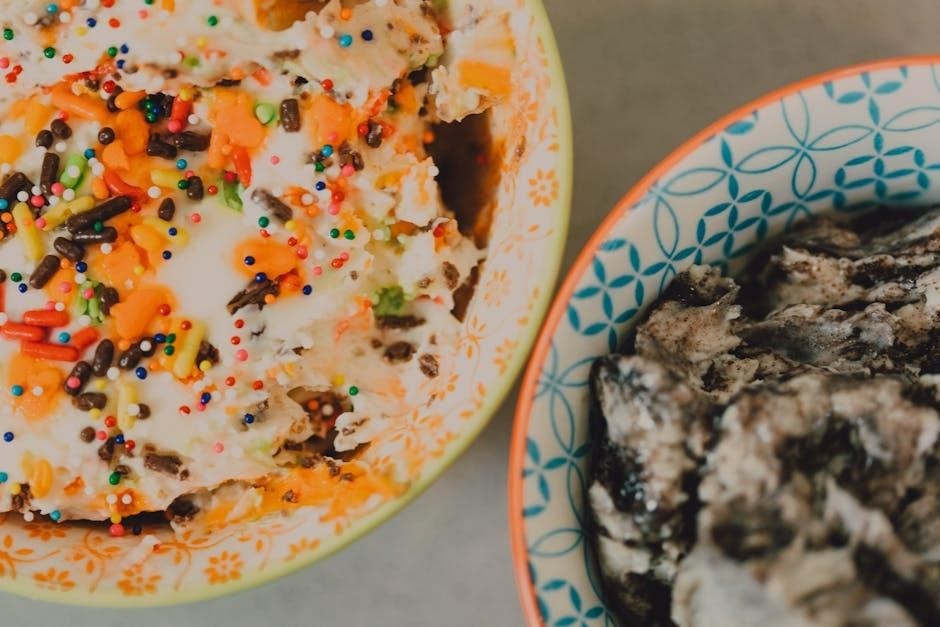
Alternative sweeteners, like honey or maple syrup, can be used, but may affect the flavor profile. Adjusting the amount of sweetener impacts the freezing point; too little can lead to icy ice cream. Experimentation is key to achieving desired sweetness.
Flavorings (Vanilla, Chocolate, Fruits)
Flavorings are where creativity shines in ice cream making! Pure vanilla extract is a classic, enhancing other flavors. High-quality cocoa powder or melted chocolate creates rich chocolate ice cream. Fresh fruits, pureed or chopped, add vibrant tastes, but can introduce water content.
Consider using fruit purees or concentrates to minimize iciness. Extracts, liqueurs, and spices offer concentrated flavors. Balancing flavors is crucial; a little goes a long way. Experiment with combinations to discover unique and delicious ice cream creations!
Finding the Right PDF Recipe Book
Selecting the ideal PDF recipe book is vital for ice cream success. Free options offer a starting point, but often lack depth or detailed instructions. Paid books generally provide more curated recipes, troubleshooting tips, and advanced techniques. Look for books with clear, concise instructions and beautiful photography.
Essential features include ingredient lists with metric and imperial measurements, maker-specific adjustments, and a variety of flavor profiles. Consider books with user reviews to gauge quality and reliability before purchasing.
Free vs. Paid PDF Recipe Books
Free PDF recipe books are readily accessible, offering a budget-friendly entry point into homemade ice cream. However, they often contain fewer recipes and may lack detailed explanations or troubleshooting advice. Paid recipe books, conversely, typically provide a more comprehensive experience.
These often include professionally tested recipes, variations, and guidance on adapting flavors. Paid resources frequently offer better organization, higher-quality photography, and dedicated support. Ultimately, the choice depends on your budget and desired level of detail.
Key Features to Look For in a Recipe Book
A strong recipe book should offer a diverse range of recipes, catering to different tastes and skill levels. Clear, concise instructions are crucial, alongside detailed ingredient lists with precise measurements. Look for books that explain the science behind ice cream making, aiding understanding and customization.
Troubleshooting sections are invaluable, addressing common issues like iciness or improper freezing. Bonus features like flavor pairing suggestions or conversion charts enhance usability. High-quality photography can also inspire and guide you through the process.
Popular Ice Cream Recipes to Include
A well-rounded recipe book must feature timeless classics, starting with a perfect Classic Vanilla Ice Cream – the foundation for countless variations. Rich Chocolate Ice Cream is essential, offering both dark and milk chocolate options. Strawberry Ice Cream provides a fruity, refreshing choice, utilizing fresh or frozen berries.
Consider including more adventurous flavors like mint chocolate chip, coffee, or salted caramel. Recipes should cater to dietary needs, with options for dairy-free or sugar-free ice cream. Detailed instructions and ingredient notes are key for success.
Classic Vanilla Ice Cream
This foundational recipe requires 2 cups heavy cream, 1 cup whole milk, ¾ cup sugar, and a pinch of salt. Infuse 1 vanilla bean (split and scraped) into the warmed dairy base. Alternatively, use 2 teaspoons of pure vanilla extract. Chill the mixture thoroughly – at least 4 hours, preferably overnight.
Churn in your ice cream maker according to the manufacturer’s instructions. The resulting ice cream should be smooth and creamy. For a richer flavor, consider adding a tablespoon of vodka to prevent ice crystals. Enjoy this versatile base for sundaes and other desserts!
Rich Chocolate Ice Cream
For an intensely chocolatey experience, combine 2 cups heavy cream, 1 cup whole milk, ¾ cup sugar, and ¼ cup unsweetened cocoa powder. Melt 6 ounces of high-quality dark chocolate and whisk it into the warm dairy base. A pinch of salt enhances the flavor. Chill the mixture completely – ideally overnight – for optimal results.
Churn in your ice cream maker following the manufacturer’s guidelines. The final product should be decadent and smooth. Consider adding a tablespoon of coffee liqueur to deepen the chocolate notes. Serve with chocolate shavings or a drizzle of chocolate sauce for an extra indulgence!
Strawberry Ice Cream
To capture the essence of summer, begin with 2 cups of fresh strawberries, hulled and sliced. Macerate them with ¼ cup sugar for at least 30 minutes to release their juices. Combine 1 ½ cups heavy cream, ¾ cup whole milk, and ½ cup sugar in a saucepan. Gently heat until the sugar dissolves, then chill.
Blend the strawberry mixture into the chilled dairy base. Churn in your ice cream maker until it reaches a soft-serve consistency. For a vibrant color and flavor, use ripe, peak-season strawberries. Garnish with fresh strawberries before serving for a delightful treat!
Advanced Ice Cream Techniques
Elevate your ice cream artistry with custard-based recipes, requiring tempering eggs for a richer, smoother texture. Mastering this technique unlocks unparalleled creaminess. Stabilizers like guar gum or xanthan gum (⅛ ⸺ ¼ tsp per quart) prevent ice crystal formation, ensuring a consistently velvety finish.
Experiment with Italian meringue, folding it into the base for lightness. Consider using a Pacojet for ultra-smooth results. Understanding overrun – the amount of air incorporated – is crucial for texture control. These techniques demand precision but yield exceptional homemade ice cream.
Making Custard-Based Ice Creams
Custard bases deliver a superior, richer ice cream experience. Begin by gently heating dairy (cream, milk) with sugar and flavorings. Slowly temper eggs – whisking a small amount of hot dairy into the eggs, then adding that mixture back to the pot – prevents scrambling.
Cook over medium heat, stirring constantly, until the custard coats the back of a spoon. Strain immediately into a bowl set over ice to halt cooking. Chill thoroughly before churning. This process creates a luxuriously smooth and stable base for exceptional ice cream.

Using Stabilizers (Guar Gum, Xanthan Gum)
Stabilizers like guar gum and xanthan gum enhance ice cream texture and prevent ice crystal formation. They bind water, resulting in a smoother, creamier final product. Use sparingly – typically 1/8 to 1/4 teaspoon per quart of base – as too much can create a gummy texture.
Whisk the stabilizer thoroughly into the sugar before adding it to the dairy base to ensure even distribution. These ingredients are particularly helpful in recipes with lower fat content or when using alternative sweeteners.
Troubleshooting Common Ice Cream Making Issues
Homemade ice cream can sometimes present challenges. Icy textures often result from slow freezing or insufficient fat content; ensure your base is well-chilled and consider adding stabilizers. If the ice cream isn’t freezing, check your machine’s settings and ensure the bowl is adequately frozen (for freezer bowl models).
Proper ingredient ratios and thorough chilling are crucial. Adjusting sugar levels can also impact texture. A detailed troubleshooting section in your PDF recipe book will empower users to overcome common hurdles.
Ice Cream Too Icy
An icy texture in homemade ice cream indicates the formation of large ice crystals. This often stems from a slow freezing process or insufficient fat content in the base. Your PDF recipe book should emphasize the importance of a well-chilled base and using high-quality, full-fat dairy.
Adding stabilizers like guar gum or xanthan gum can help prevent crystal growth. Detailed explanations and precise measurements within the recipes are vital for achieving a smooth, creamy consistency, avoiding the undesirable icy outcome.
Ice Cream Not Freezing
If your ice cream isn’t freezing, the issue often lies with the machine or the base’s temperature. Your PDF recipe book must clearly instruct users to ensure the freezer bowl is completely frozen – typically 24 hours – before use. For compressor models, verify proper settings and functionality.
A warm base will significantly hinder freezing. Recipes should stress thorough chilling of the mixture before churning. Include a troubleshooting section detailing these common causes and solutions, empowering users to overcome this frustrating problem.
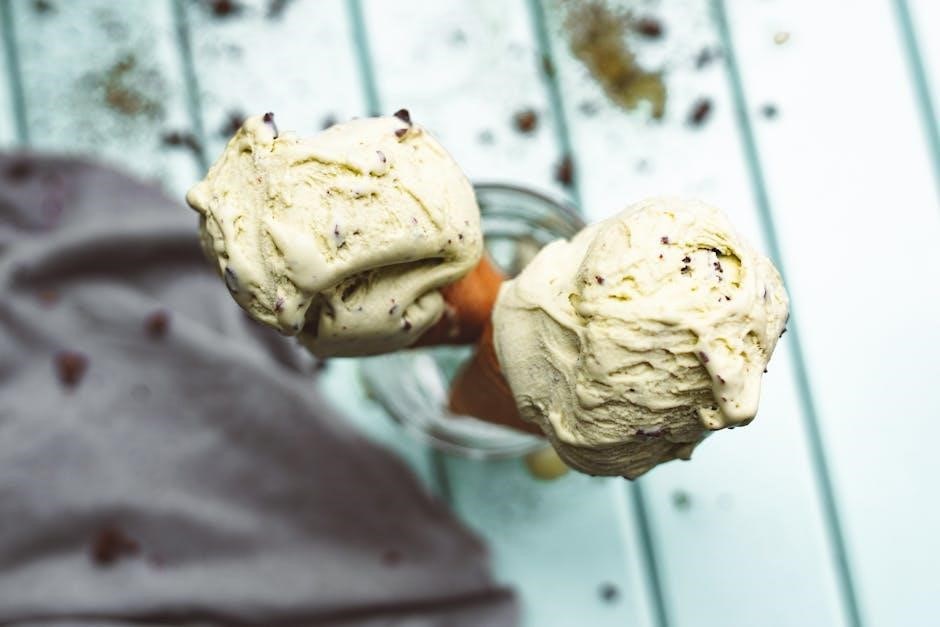
Sea Salt Ice Cream Recipe (Example from Online Sources)
Your PDF recipe book should showcase diverse flavors, including a sophisticated option like Sea Salt Ice Cream. A sample recipe demonstrates practical application of techniques discussed. This recipe, adapted from online sources, features a custard base, emphasizing egg yolks for richness and texture.
Detailed instructions, including salt quantity and churning times, are crucial. Highlight the importance of high-quality sea salt for balanced flavor. Include a visually appealing image of the finished product to inspire readers and enhance the recipe book’s appeal.
Resources for Additional Recipes & Information
A valuable PDF recipe book extends beyond its core content, offering links to external resources. Include online ice cream communities, like forums and social media groups, for peer support and recipe exchange. Direct readers to ice cream maker manufacturer websites for troubleshooting and specific machine guidance.
Curate a list of reputable food blogs and websites specializing in frozen desserts. Consider adding links to USFS (United States Figure Skating) for related information. These resources empower users to continue their ice cream journey beyond the book’s pages.
Online Ice Cream Communities
Engaging with online communities fosters learning and inspiration. Dedicated forums and social media groups provide platforms to share recipes, troubleshoot issues, and connect with fellow ice cream enthusiasts. These spaces often feature expert advice and innovative techniques beyond standard recipe books.
Look for groups focused on specific ice cream maker models or dietary needs (vegan, dairy-free). Platforms like Reddit and Facebook host active communities. Encourage users to share their creations and experiences, building a collaborative learning environment.
Ice Cream Maker Manufacturer Websites
Manufacturer websites are invaluable resources for recipes tailored to their specific machines. Brands like Cuisinart, Breville, and KitchenAid often provide exclusive recipe collections, troubleshooting guides, and helpful videos. These resources ensure optimal performance and unlock the full potential of your ice cream maker.
Check for downloadable recipe books or access to online recipe databases. Many manufacturers also offer customer support forums where users can exchange tips and solutions. Exploring these official channels provides reliable information and enhances your ice cream-making journey.
Safety Considerations When Making Ice Cream
Prioritize food safety during preparation. Always wash hands thoroughly before handling ingredients and ensure all equipment is clean and sanitized. When working with raw eggs in custard-based recipes, use pasteurized eggs to minimize salmonella risk. Be cautious when handling the ice cream maker’s motor and avoid contact with moving parts.
Properly store ingredients, especially dairy, to prevent spoilage. Exercise care when using hot liquids during the cooking process. Always unplug the ice cream maker before cleaning or disassembling it, ensuring electrical safety.
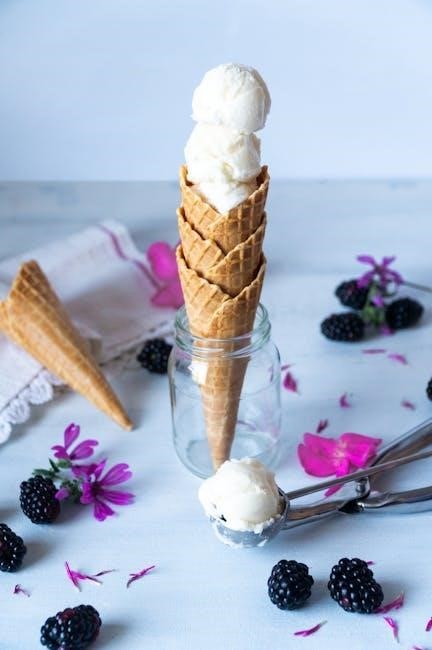
Storing Homemade Ice Cream
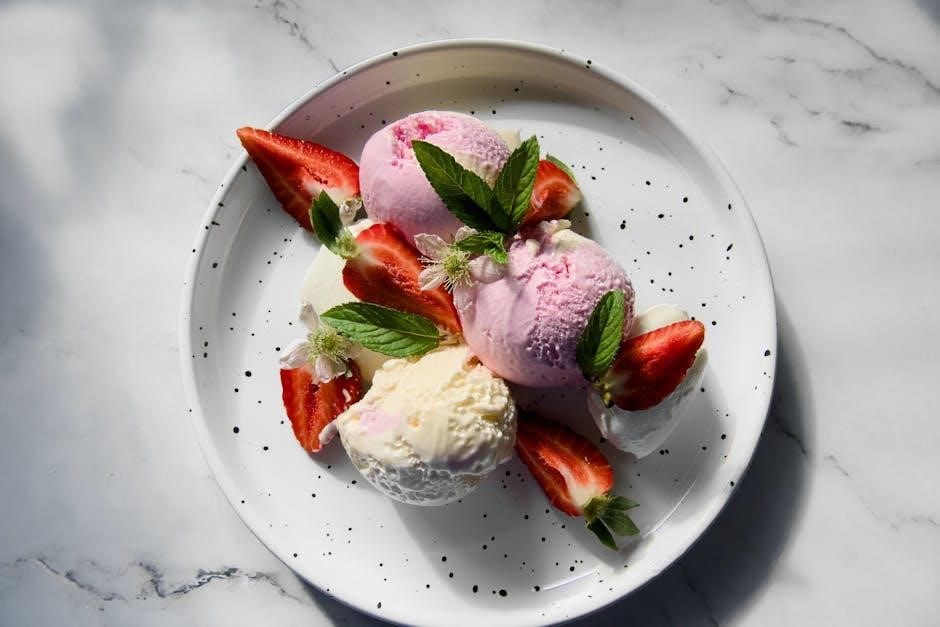
Proper storage is crucial for maintaining texture and flavor. Transfer freshly churned ice cream to an airtight container immediately. Press plastic wrap directly onto the surface to prevent ice crystal formation. Store in the coldest part of your freezer, ideally around -18°C (0°F).
Homemade ice cream is best consumed within 1-2 weeks for optimal quality. Avoid refreezing melted ice cream as it will become icy. Label containers with the date for easy tracking and enjoy your delicious creations!
Converting Recipes for Different Ice Cream Makers
Adapting recipes requires understanding your machine’s capacity and freezing method. Compressor models generally handle larger batches and require less pre-freezing. Freezer bowl machines need a fully frozen bowl – adjust chilling time accordingly.
Recipes designed for one type may need adjustments to liquid ratios or churning times for others. Monitor consistency closely during churning and add small amounts of liquid if needed. Experimentation is key to achieving perfect results with your specific ice cream maker!
Printing and Organizing Your PDF Recipe Book
Printing your PDF allows for a tactile, kitchen-friendly experience. Choose a binding method – three-hole punch, coil binding, or simple staples – for durability. Consider printing on waterproof paper to protect against splashes and spills during use.
Organize recipes by flavor profile (fruit, chocolate, nut) or difficulty level. Include a table of contents for quick reference. Add blank pages for personal notes and modifications, creating a truly customized ice cream making resource!
Future Trends in Homemade Ice Cream
Expect a surge in plant-based ice cream recipes, utilizing coconut milk, oat milk, and cashew cream for dairy-free delights. Unique flavor combinations – savory herbs, floral infusions, and spicy accents – will gain popularity. Technological advancements in ice cream makers will offer greater precision and automation.
PDF recipe books will adapt, incorporating interactive elements like video tutorials and ingredient sourcing links. Sustainability will drive trends, focusing on locally sourced ingredients and eco-friendly packaging.
Leave a Reply
You must be logged in to post a comment.